Wound care at home.
Focused care in a familiar place. Learn what happens during a home visit, how to prepare, and what to clarify with your care team.
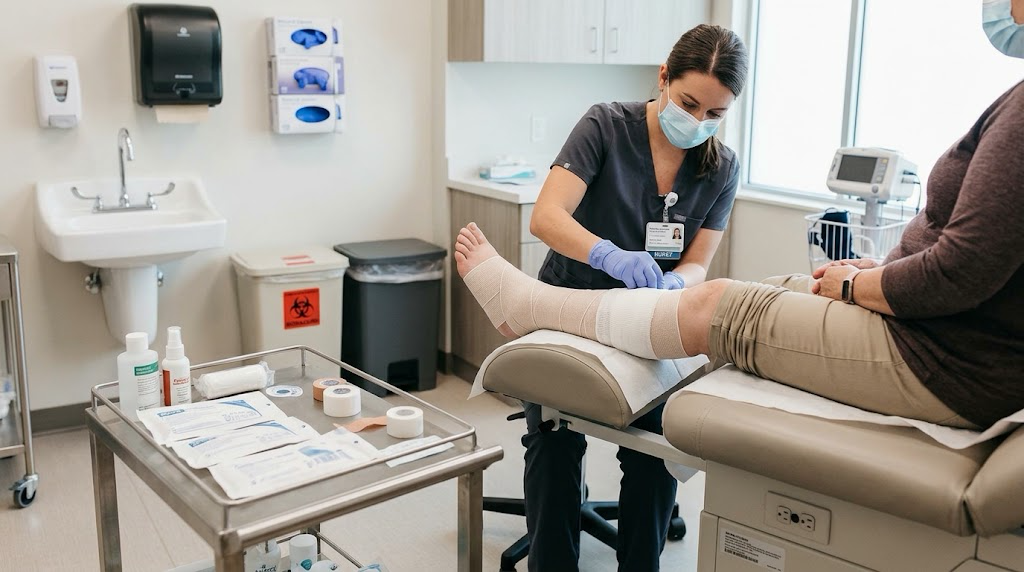
Less to navigate.
More room for questions.
Wound care can involve appointments, instructions, supplies, and several people helping along the way. Prime Heal’s mobile model is built around bringing clinical attention into that everyday setting.
A family member or caregiver can help with the conversation. Your care team remains part of the plan.
What happens during a home visit?
The evaluation helps establish what the wound needs and whether care can be provided safely in the home.
- Review the concernDiscuss the wound, relevant health history, current treatment, and the questions that matter to you.
- Examine the woundThe physician evaluates the wound and factors that may affect the care plan. An evaluation does not guarantee a particular treatment.
- Talk through the next stepsDiscuss care options, follow-up, and the roles of your caregiver and existing clinicians. Some needs require another specialist or care setting.
Preparing for a first visit
Once a visit has been confirmed, a little preparation helps make time with the physician useful.
- Have your care information availableKeep a current medication list, allergies, and relevant discharge or treatment instructions nearby.
- Bring your questionsMake a short list of changes you have noticed and questions about the plan.
- Involve the right supportIf you wish, arrange for a caregiver or someone familiar with your care to be present.
- Identify your existing care teamHave the names of your primary clinician, surgeon, or home-health agency available.
- Prepare a comfortable spaceChoose a well-lit, accessible area. The practice can explain any specific arrangements before the visit.
Between visits
Before the visit ends, make sure these everyday responsibilities are clear:
- Dressing changesWho will change the dressing, how often, and what instructions should they follow?
- SuppliesWho will arrange the recommended supplies, and whom should you contact if something is missing?
- Questions and follow-upWhat is the next review plan, whom should you contact with a change or concern, and what instructions apply after hours?
Use the instructions and contact details provided by your treating team. This website does not monitor symptoms or messages.
Existing patient supportAbout this information & further reading
General education, not individual medical advice. Clinical content is awaiting Dr. Davtyan’s final review. Treatment suitability and availability are confirmed directly with the practice.
Let’s talk about your care.
For yourself, someone you love, or a patient you support.